Home / Destinations
Bhutan is small on the map and large in practice. These are the valleys we travel through most, and what each one is actually like.
Distances in Bhutan are measured in passes, not kilometres. Thimphu to Punakha is seventy-odd kilometres and three hours, because there is a 3,100-metre pass in the middle of it. That is the country’s real geography, and it is why we would rather you saw four valleys properly than eight from a windscreen.
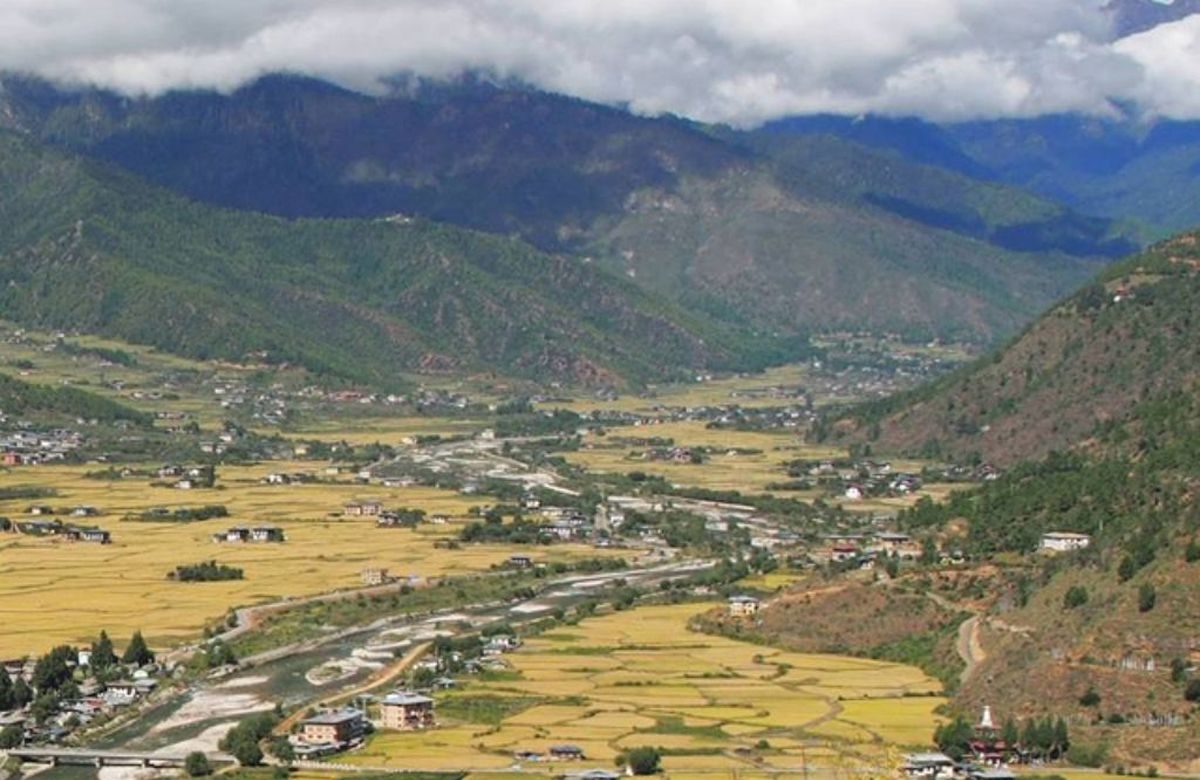
Every visitor starts here, because Paro holds the country’s principal international airport — a runway laid along the river between ridges. It would be worth a stay even without the flights: Rinpung Dzong above the covered bridge, Kyichu Lhakhang among the oldest temples in Bhutan, the ruined watchtower of Drukgyel, and above all Paro Taktsang, the Tiger’s Nest, clinging to a cliff 900 metres above the valley floor.
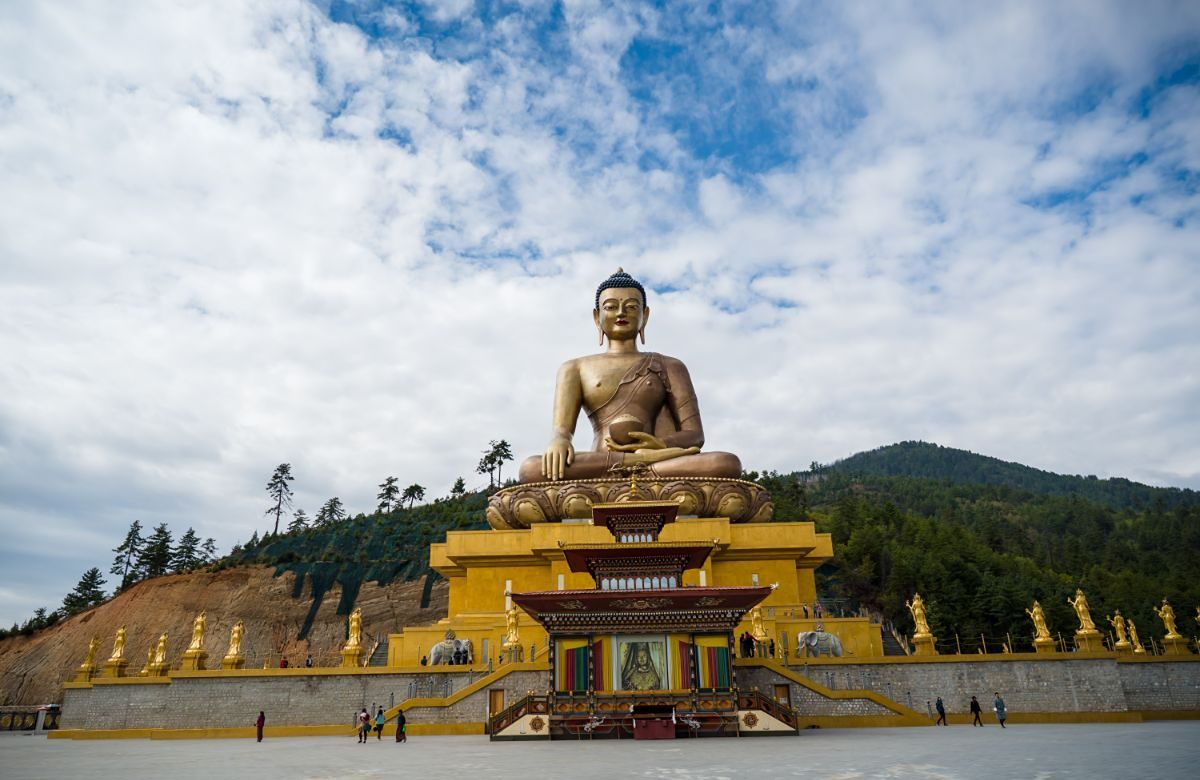
Bhutan’s capital is a city of about a hundred thousand people with no traffic lights, a policeman directing cars by hand at the main junction, and monks queueing for momos. Tashichho Dzong houses the government and the central monastic body; the great seated Buddha Dordenma looks down from the southern ridge; and the school of thirteen traditional arts, the textile museum and the weekend market are all worth an unhurried morning.
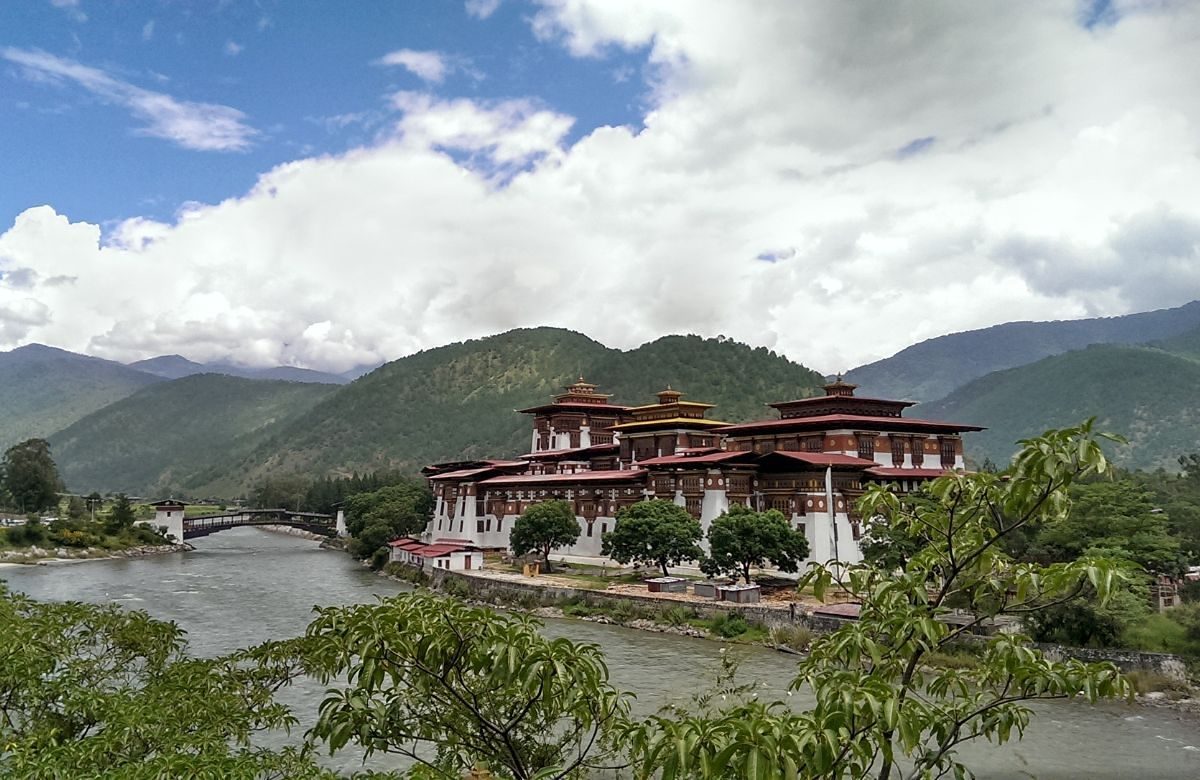
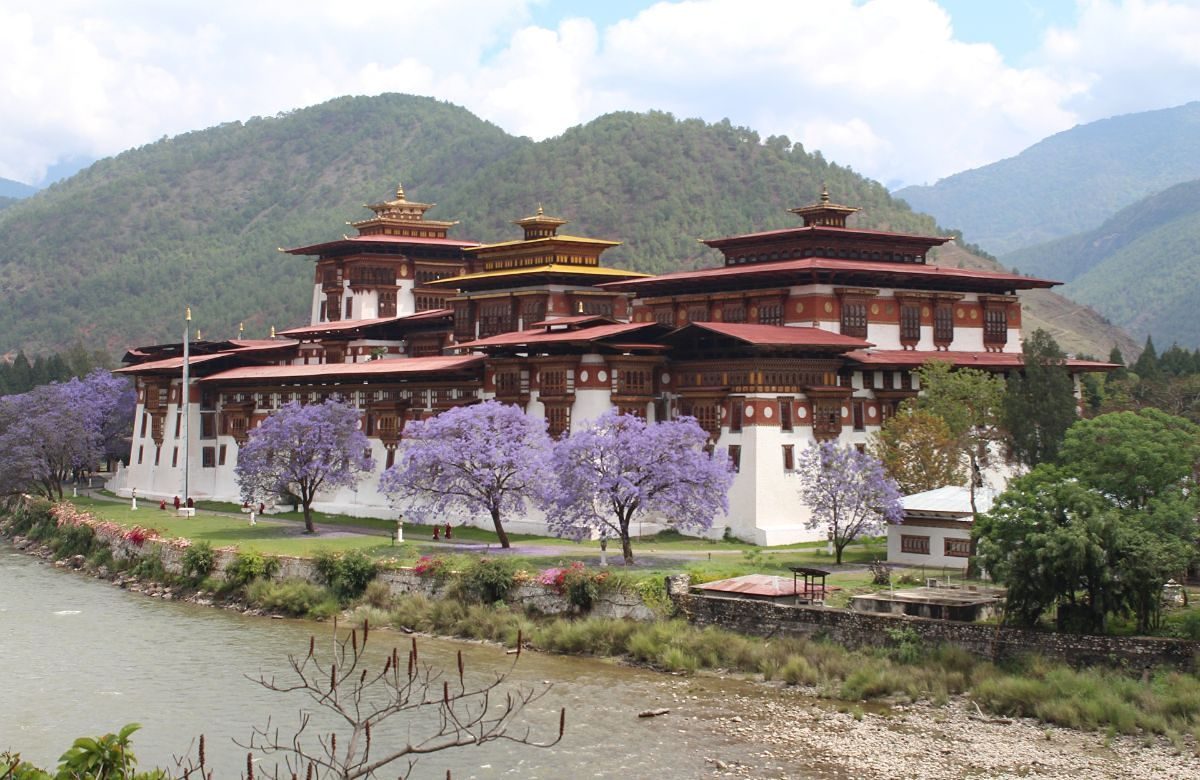
Down the far side of Dochula, nearly two thousand metres below Thimphu, Punakha is warm, green and full of rice. Punakha Dzong stands on the spit of land where the Pho Chhu and Mo Chhu join, and it is the most beautiful building in the country by common consent — jacaranda in spring, and a courtyard that stops conversation. A suspension bridge and an hour’s walk up through the terraces bring you to Khamsum Yulley Namgyal Chorten.
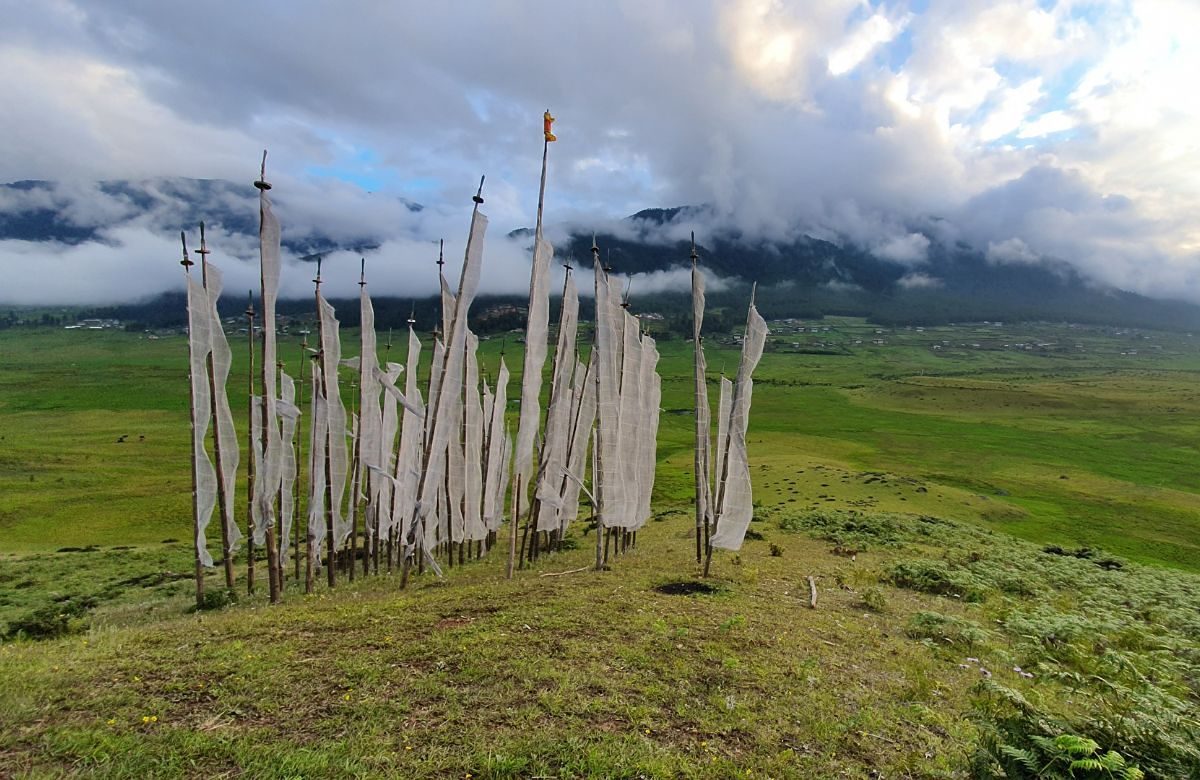
A wide glacial bowl at about 3,000 metres, treeless and open in a country of forest. Gangtey Goenpa sits on the ridge above it. Black-necked cranes arrive from the Tibetan plateau in late October and stay until mid-February, and the valley protects them carefully — power lines here run underground for their sake. Walk the Gangtey nature trail across the valley floor in the afternoon.
Four valleys in central Bhutan — Chumey, Choekhor, Tang and Ura — holding the oldest and most revered temples in the kingdom. Jambay Lhakhang is counted among the temples founded in the seventh century; Kurjey Lhakhang stands where Guru Rinpoche is said to have left the imprint of his body in rock. Getting here means two more mountain passes, and it changes what a trip to Bhutan means.
Behind Chele La, closed to visitors until 2002 and still the quietest valley in the west. Barley fields along the Haa Chhu, the White and Black temples, village paths that go somewhere, and a summer festival in July that is still for the people who live here. This is where our office is and where our guides are from.
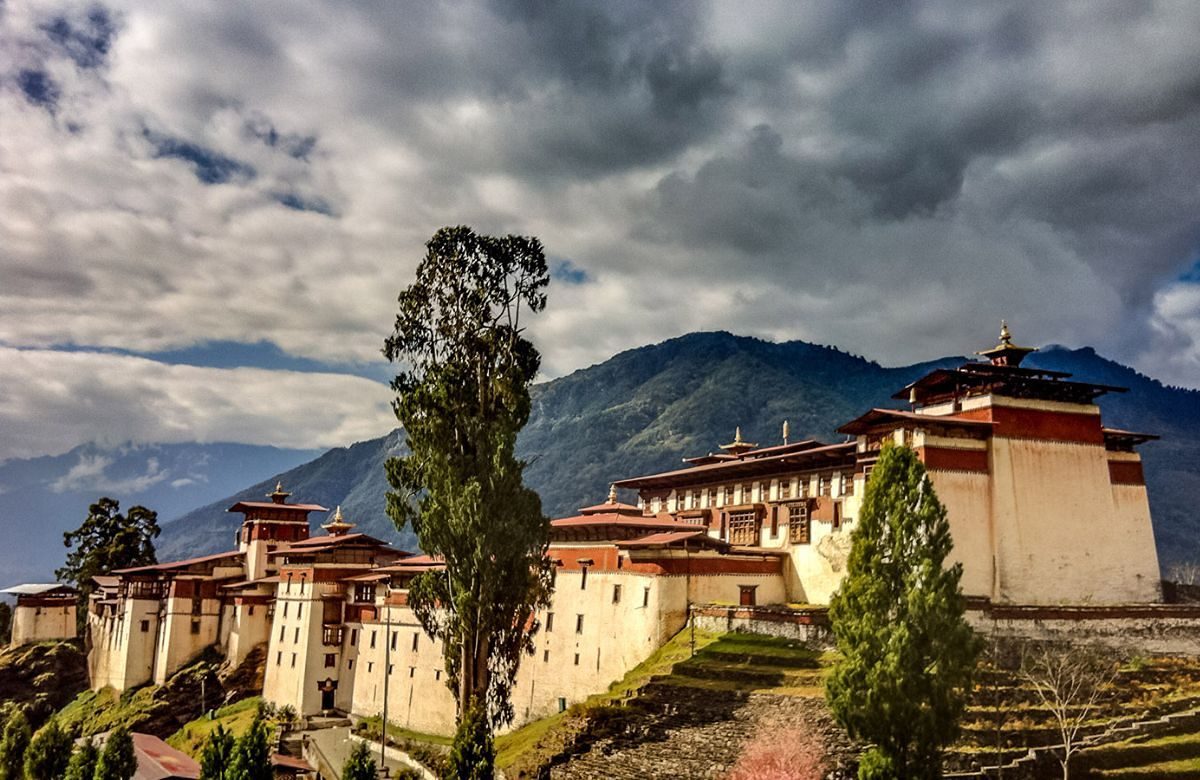
The longest dzong in Bhutan, strung along a ridge above a gorge.
The east’s largest town, and the road towards India at Samdrup Jongkhar.
Ancestral home of the royal family, and the country’s finest weaving.
Eastern Bhutan needs ten days or more, or a domestic flight. If you have the time, ask us — it is the part of the country we most enjoy planning.
We will tell you honestly how many you can reach in the nights you have, and what you would be giving up to add one more.