Every Journey is a Story
Home / Plan your trip / Bhutan travel questions
The things travellers ask us before they book, answered plainly and kept current.
We would rather answer a question than have you guess. Write with whatever is on your mind — how cold it really gets in January, whether the children will cope, what the food is like.
Every international visitor except Indian nationals needs a visa, applied for before travel, with a one-off non-refundable fee of US$40 per person. You may apply yourself on the Department of Tourism’s online system or let us submit it with your booking. Processing usually takes about five working days.
A nightly levy of US$100 per adult that funds free healthcare, free education and Bhutan’s environmental programmes. Children aged six to twelve pay US$50 and under-sixes are exempt; Indian nationals pay Nu. 1,200. The current rate runs until 31 August 2027.
For a cultural journey, comfortable walking on uneven ground and stairs is enough — with the exception of the Tiger’s Nest, which is around 900 metres of ascent over four to five hours. For a trek you should be able to walk five to six hours a day on consecutive days at altitude.
Yes, and Bhutanese hotels and guides are good with them. Drives are long, so we shorten days and add walks and farm visits. Under-sixes are exempt from the nightly fee and six- to twelve-year-olds pay half.
The ngultrum, pegged one-to-one to the Indian rupee, which is also accepted. There are ATMs in the main towns but they are unreliable for foreign cards — bring cash to change and do not count on paying by card outside larger hotels.
Yes in the main valleys, and a local SIM is easy to arrange on arrival. Coverage thins in the east and disappears on trek.
Tipping is not obligatory and never expected of you. If your guide and driver have looked after you well, most travellers give something at the end of the journey; your guide will never raise it.
Layers in every season — a morning on a 3,000-metre pass is cold even in June. Broken-in walking shoes, a windproof and waterproof shell, a warm mid-layer, sun protection and a hat. Modest dress for dzongs and temples.
No. You are free to walk around towns such as Paro and Thimphu on your own. A licensed guide is required to enter dzongs, monasteries and monuments, and to travel beyond those towns.
No — foreign visitors may not self-drive. Every journey includes a private vehicle and a Bhutanese driver, which given the mountain roads is no hardship.
Paro to Thimphu is about an hour and a half; Thimphu to Punakha about three hours over a 3,100-metre pass; Punakha to Bumthang is two long days. Roads are winding, so distances mean little and hours mean everything.
Chilli-forward and cheese-heavy — ema datshi is the national dish and chillies are a vegetable here, not a spice. Hotels serve milder buffets with Indian and continental options, and vegetarians eat very well.
Most cultural journeys stay between 1,200 and 3,100 metres, where problems are uncommon. Passes reach 3,900 metres briefly. On treks we build in acclimatisation, and your guide carries a first aid kit and knows the evacuation routes.
Crime against visitors is very rare and Bhutan is among the safer countries you can travel in. The real risks are altitude, mountain roads and weather — all of which are managed by how an itinerary is built.
There are no mandatory vaccinations for entry from most countries. Ask your own doctor or a travel clinic about routine cover and anything specific to your health and route.
Not a visa requirement, but strongly recommended, including evacuation cover if you are trekking.
Covered shoulders and knees, long sleeves, and no hats indoors. Shoes come off before entering a temple’s inner chamber. Your guide will tell you where photography is not permitted.
Ask first, as you would anywhere. Most Bhutanese are relaxed about it; monks in ceremony and people at prayer deserve more care.
No. Mountaineering has been prohibited since 2003 out of respect for the deities held to live on the peaks, which is why Gangkar Puensum — at 7,570 metres, the highest unclimbed mountain in the world — remains unclimbed. Trekking to base camps and over passes is permitted.
Smoking in public places is prohibited and tobacco is heavily restricted. If you bring tobacco for personal use, declare it at customs and expect to pay duty.
Tell us your dates and what you would like the journey to include. You will get a written day-by-day itinerary and a full quotation back, with nothing to pay while we work it out.
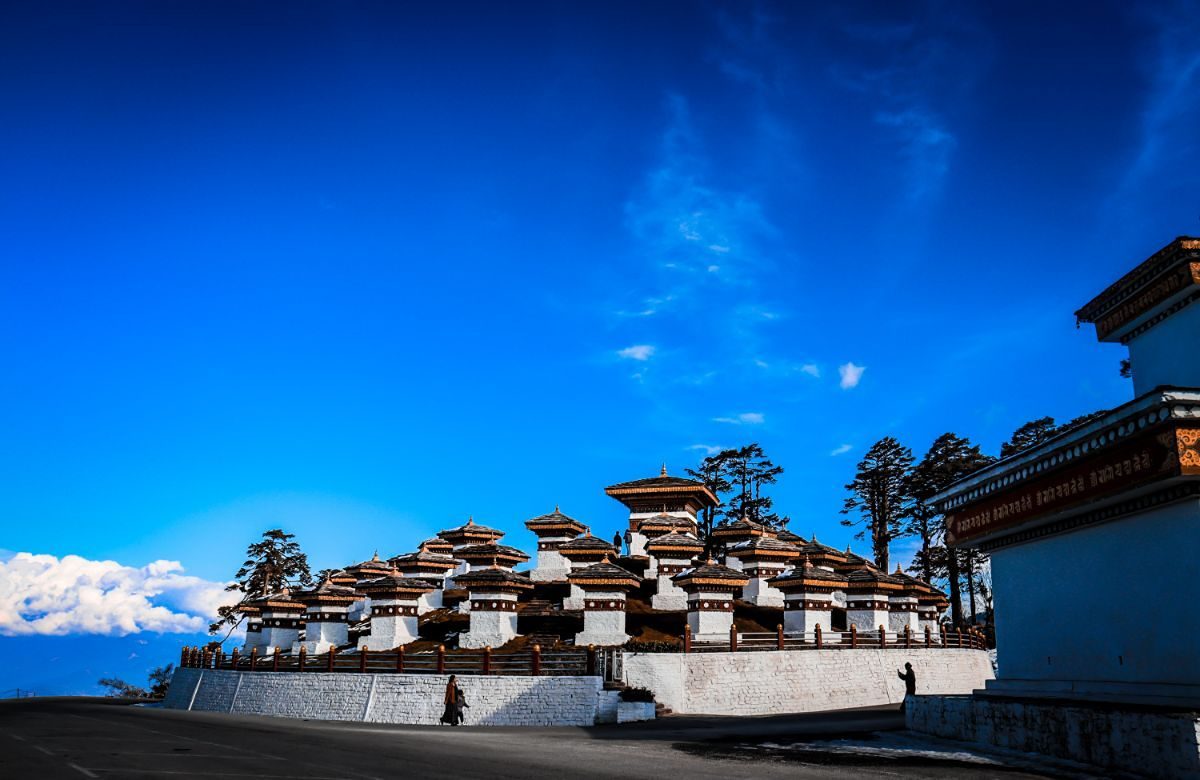
Four seasons, four different countries. What changes is the light, the crowd, and what is …
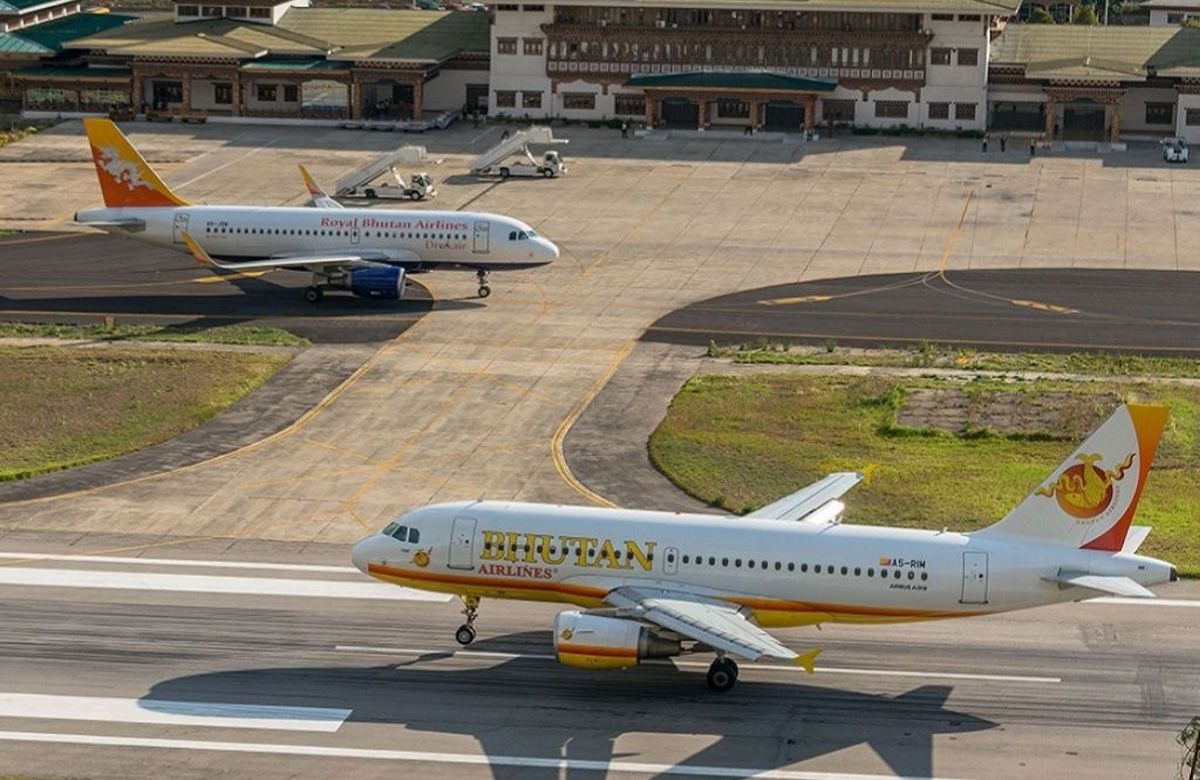
By air into Paro, or overland from India — the routes, the airlines and the connections th…
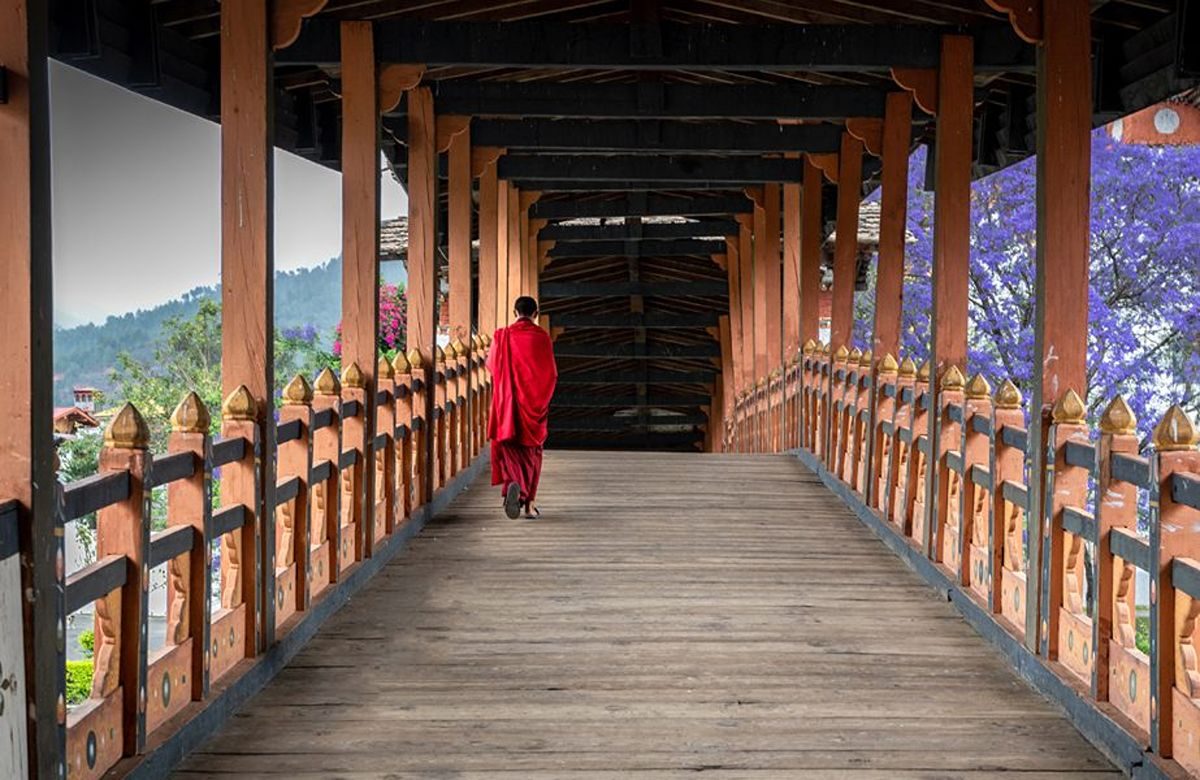
Exactly what Bhutan asks of a visitor, what it costs, and which parts we handle for you.…